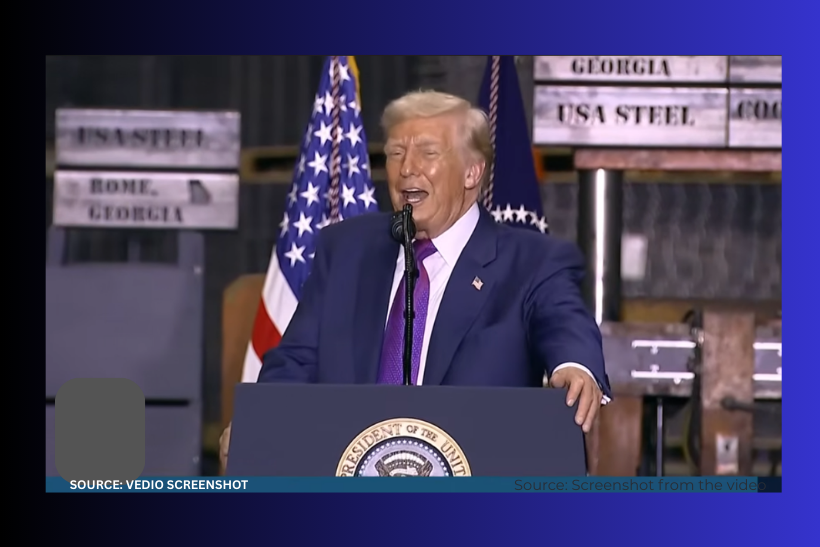
President Donald Trump is considering a limited military strike against Iran in the coming days as part of a strategy to increase pressure on Tehran, while preparing the U.S. military for the possibility of a prolonged conflict if diplomatic negotiations fail to produce a meaningful agreement, senior U.S. officials and analysts told multiple news outlets.
The discussions come amid a large U.S. military deployment to the Middle East and Europe, with aerial tracker data showing dozens of U.S. fighter jets, tankers and support aircraft en route this week in what officials described as a strategic repositioning intended to provide maximum leverage over Iran.
These forces include the USS Abraham Lincoln and USS Gerald R. Ford carrier strike groups, along with escort ships and aerial refueling capability.
Trump acknowledged on Thursday that a decision on military action could come within “probably 10 days,” and emphasized that while talks with Tehran had been progressing, Iran must reach what he described as a “meaningful agreement.” “Otherwise, bad things happen,” Trump said at the first Board of Peace meeting, referring to the U.S. demands that Iran curb its nuclear program, reduce its missile arsenal and end support for regional armed proxies.
Supporters of possible military action, such as Michael Makovsky, president of the Jewish Institute for National Security of America, told reporters that a strike was “very likely” and that the scale of the buildup suggests preparations for more than a “symbolic” operation.
However, diplomatic and regional officials warned that even limited strikes could derail negotiations and decrease Iran’s willingness to engage.
Iran has responded to U.S. pressure with military exercises in the Strait of Hormuz and annual war games with Russian forces, while satellite imagery shows reinforced structures at sensitive Iranian military sites previously struck in conflicts.
Israeli defense officials have also indicated heightened readiness, with their security cabinet meeting ahead of schedule, underscoring regional concern over potential escalation
Tehran continues to assert that its nuclear program is peaceful, though it resists U.S. demands on its ballistic missile development and support for allied armed groups.
Diplomatic efforts in Geneva involving U.S. envoys, Iran’s Foreign Minister Abbas Araghchi, and intermediaries have yet to bridge fundamental differences, with Iran expected to submit a written proposal in coming days.