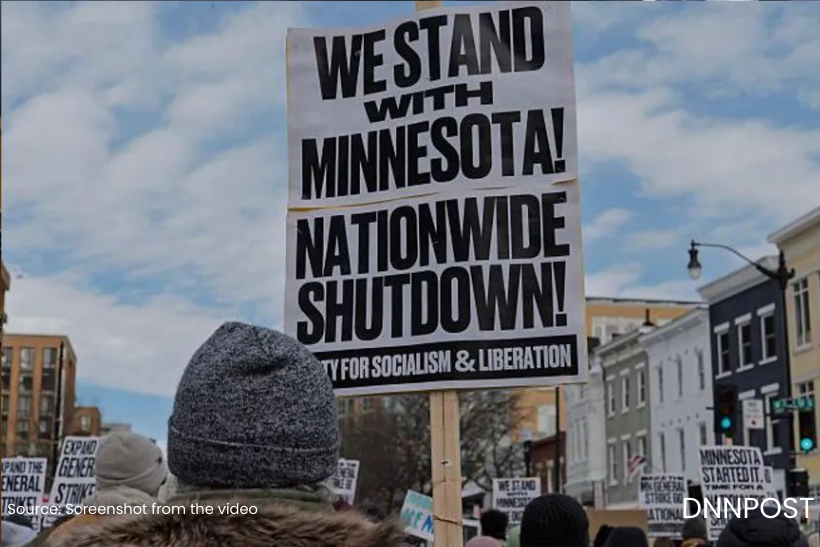
Negotiations to avert a partial U.S. government shutdown intensified in Washington as Democrats and the White House moved closer to a possible compromise following the fatal shooting of a protester during a federal immigration operation in Minneapolis.
Democrats have sought to strip funding for the Department of Homeland Security from a roughly $1.2 trillion government-wide spending package after a Border Patrol agent shot and killed 37-year-old Alex Pretti in Minneapolis on Saturday. The funding deadline expires at 12:01 a.m. Friday, and failure to reach a deal would trigger the second shutdown in recent months.
U.S. media reported that Senate Democratic leaders and the Trump administration were nearing an agreement that would allow five of the six annual spending bills to pass before the deadline, while granting DHS a short-term funding extension. That pause would allow further negotiations over new restrictions on federal immigration agents, including limits on mask use and clearer identification requirements.
The spending package has already passed the House of Representatives but requires at least 60 votes in the Senate. Republicans hold 53 seats, meaning Democratic support is essential.
Senate Minority Leader Chuck Schumer said earlier this week that Democrats were unified in opposing any legislation that funds Immigration and Customs Enforcement without reforms. “This madness, this terror must stop,” Schumer said Wednesday, as some Democrats escalated their demands by calling for the removal of Homeland Security Secretary Kristi Noem and broader changes to ICE and the Border Patrol.
Senate Majority Leader John Thune said negotiations remained “productive,” while some Republicans warned against allowing immigration disputes to force a shutdown. Sen. John Cornyn of Texas said changes “must not come at the expense of shutting down the government.”
If a shutdown occurs, it would not affect all federal agencies. Several departments are already funded through the end of the 2026 fiscal year, but agencies tied to the pending bills, including Defense, Health and Human Services, Treasury, the federal courts and DHS, would be impacted. Essential workers would continue on the job without pay until funding is restored.
The most recent shutdown, which ended in November 2025 after 43 days, left about 1.4 million federal employees furloughed or working without pay and disrupted air travel, food assistance and other services nationwide.